
How Drainage Systems Reduce Bending Moments and Shear Forces in Retaining Walls
Retaining wall drainage can help reduce bending moment, shear stress, and wall deflection by relieving hydrostatic pressure behind the structure.
Why Retaining Wall Drainage Matters
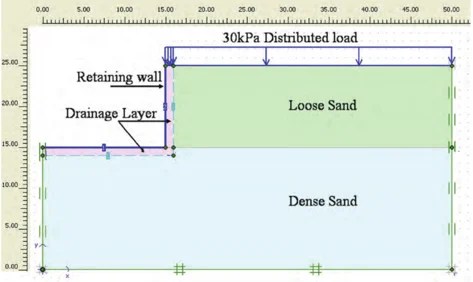
An earlier JET Filter blog summary referenced research from Universiti Putra Malaysia using PLAXIS finite element modeling to evaluate the effect of drainage on retaining wall stability. The model compared wall behavior with and without drainage to evaluate how drainage affected bending moment, shear stress, and deflection.
The analysis showed that drainage systems can have a major influence on retaining wall performance. When drainage was incorporated into the retaining wall model, the wall experienced lower structural demand compared to the wall without drainage.
Drainage Reduced Wall Forces and Movement
The study summary reported that a retaining wall with a drainage system showed measurable reductions in bending moment, shear stress, and deflection. These reductions help show why drainage is a critical part of retaining wall design and long-term performance.
Design takeaway: Retaining wall drainage does more than move water. It can reduce structural demand by relieving hydrostatic pressure and limiting movement behind the wall.
Drainage Supports Long-Term Wall Stability
When groundwater and runoff collect behind a retaining wall, hydrostatic pressure can increase lateral loading and contribute to movement, cracking, or premature wall distress. A properly designed drainage system helps provide a controlled path for water to escape while supporting stable wall performance.
Lower Wall Loading
Drainage helps reduce trapped water pressure behind the wall, lowering lateral forces that can affect structural performance.
Reduced Deflection
By relieving hydrostatic pressure, drainage can help reduce wall movement and improve long-term serviceability.
Improved Maintainability
Maintainable drainage access helps owners and contractors preserve drainage performance over the life of the structure.
Using JET Filter for Maintainable Retaining Wall Drainage
JET Filter System products can be used to create a simple, efficient, and maintainable weep hole drainage system for retaining walls, seawalls, bulkheads, bridge abutments, culverts, and other earth retaining structures.
Unlike drainage systems that become buried or inaccessible, JET Filter components are designed for future inspection and servicing from the front side of the structure. This helps preserve drainage function and reduces the risk of hidden drainage failure over time.
Learn More from JET Filter
Need Retaining Wall Drainage Support?
JET Filter provides maintainable weep hole drainage systems that help relieve hydrostatic pressure, support soil retention, and improve long-term retaining wall performance.
Contact JET Filter